
What can AI actually check across construction documents in 2026?
The gap between a slick AI demo and a real project set is where teams get burned. Here is what the technology does well, where it fails, and what to demand before you trust it.

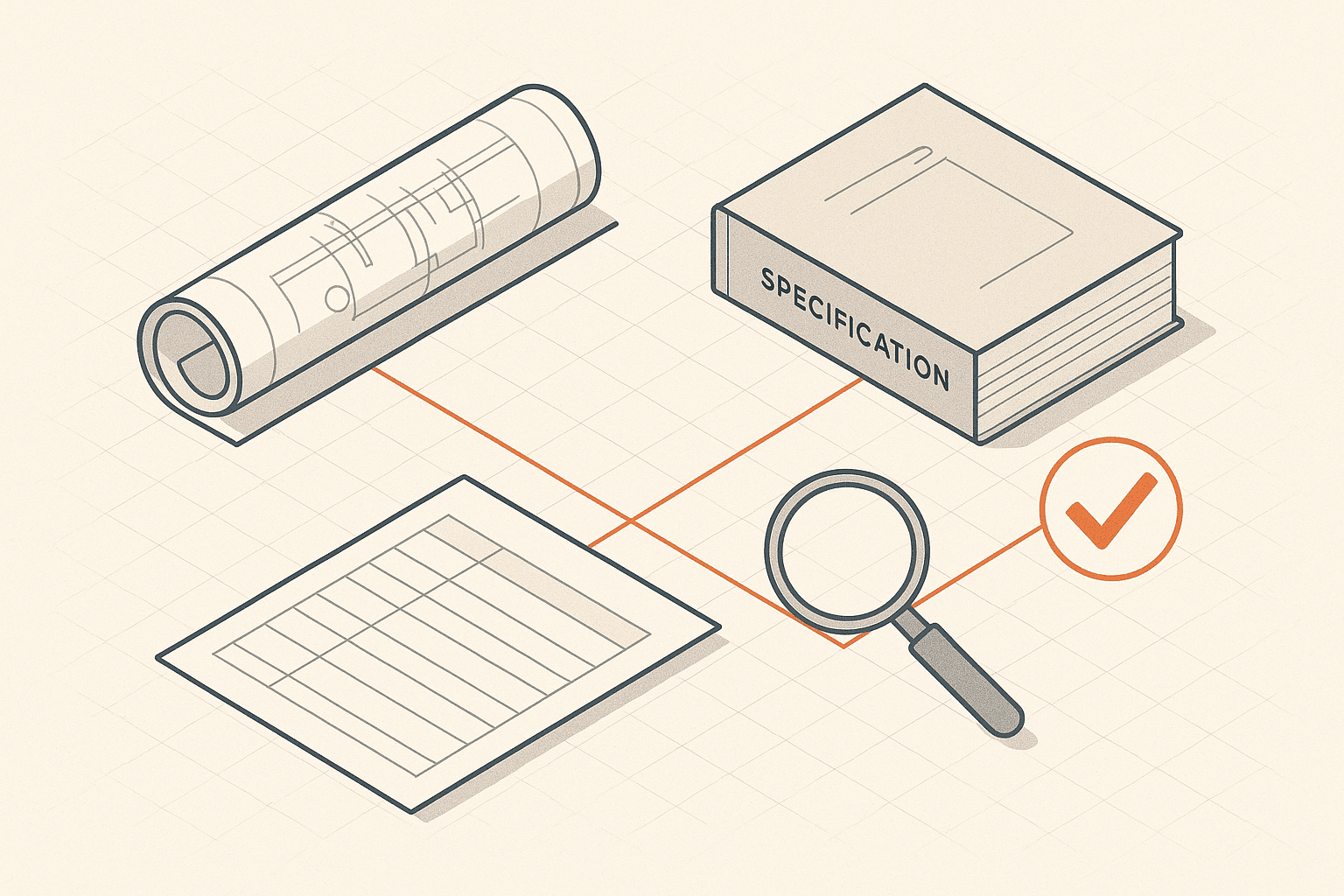
Two years ago, "AI for construction documents" was a line on a slide. Now it is a crowded market, and that is exactly why it pays to be clear about what the technology actually does. The distance between a clean demo and a real project set is where teams get burned.
So here is a straight read on what works, what still falls over, and what you should refuse to give up before you let any of it near a decision.
What does AI genuinely do well today?
The real advance is not that a model can read a PDF. It is that it can compare a lot of documents against each other quickly. The better tools read the whole set (drawings, specifications, RFIs, submittals, contracts, as-builts) and surface the inconsistencies that are easy to miss by hand because the documents are structured so differently.
In practice that looks like:
- Spec and drawing disagreeing about the same element.
- A submitted product that does not meet the section it is filed under.
- What actually changed between two revisions of a sheet.
- Whether a question already has an answer buried in the contract before someone raises an RFI.
Underneath, those are all the same task. Pull out what each document says about a given element, line it up, and look for the disagreement. Computers are good at that. People who are tired and three weeks behind are not.
Where does it still fall down?
Three places, honestly.
First, confident wrong answers. A model can state something false just as smoothly as something true. A finding with no evidence behind it is a liability dressed up as an insight.
Second, bad inputs. A skewed scan, a flattened drawing with no text layer, a garbled spec. The output is only as good as what went in.
Third, real judgement calls. "Which document governs when they conflict?" is often a contractual question. The tool can find the conflict and point you at the precedence clause, but it should not be the thing deciding who is right.
Tools that overpromise tend to blur that last line and present a guess as a conclusion. Good ones leave the judgement to you.
What should you insist on before trusting it?
One thing above everything: sources. Every finding has to point back to where it came from, the spec line, the drawing sheet, the submittal page, so you can verify it in seconds. This is the feature that separates a tool you can lean on from a confident black box. If a product gives you answers you cannot trace, use it to brainstorm, not to sign off.
After that, a short list of questions worth asking a vendor:
- Does it read the whole set together, or one document at a time? Reading across documents is where the value is.
- Does it cope with your documents, the big drawings and dense specs and scanned PDFs, not just the tidy sample in the demo?
- Is a finding specific ("section 230923 calls for X, the submittal shows Y") or vague ("possible inconsistency detected")? Vague is not useful.
Show your work: why citations are the dividing line
We built Alloovium around that idea on purpose. It reads across the full set, pulls out what each document claims, and flags conflicts and mismatches, and every finding comes with a citation back to both sources. A finding you cannot check is not an answer. It is a guess with good grammar.
The point was never that an AI looked at your documents. It is that the boring, high-volume comparisons get done across the whole set, and a human can confirm each one in seconds instead of hunting for an afternoon.
What to do next
If you are weighing up tools, run the same hard document through each of them. Ideally pick a set you already know has a conflict in it. Then judge on two questions. Did it find the real issue? And can you trace every finding back to the source? Those two answers will tell you more than any feature list.
If you want to run that test against Alloovium, book a demo and bring the messy set, not the clean one.
Reference
Frequently asked questions
Written by
Builds the retrieval, extraction and verification engine behind Alloovium. Writes about how the system reads construction documents and catches what humans miss.
See it on your set
Run Alloovium across your own contracts, specs and drawings.
Upload a project and watch it read, cross-reference and cite across the whole document set, and flag what conflicts.
Book a demoDiscussion
Comments
More dispatches
Keep reading
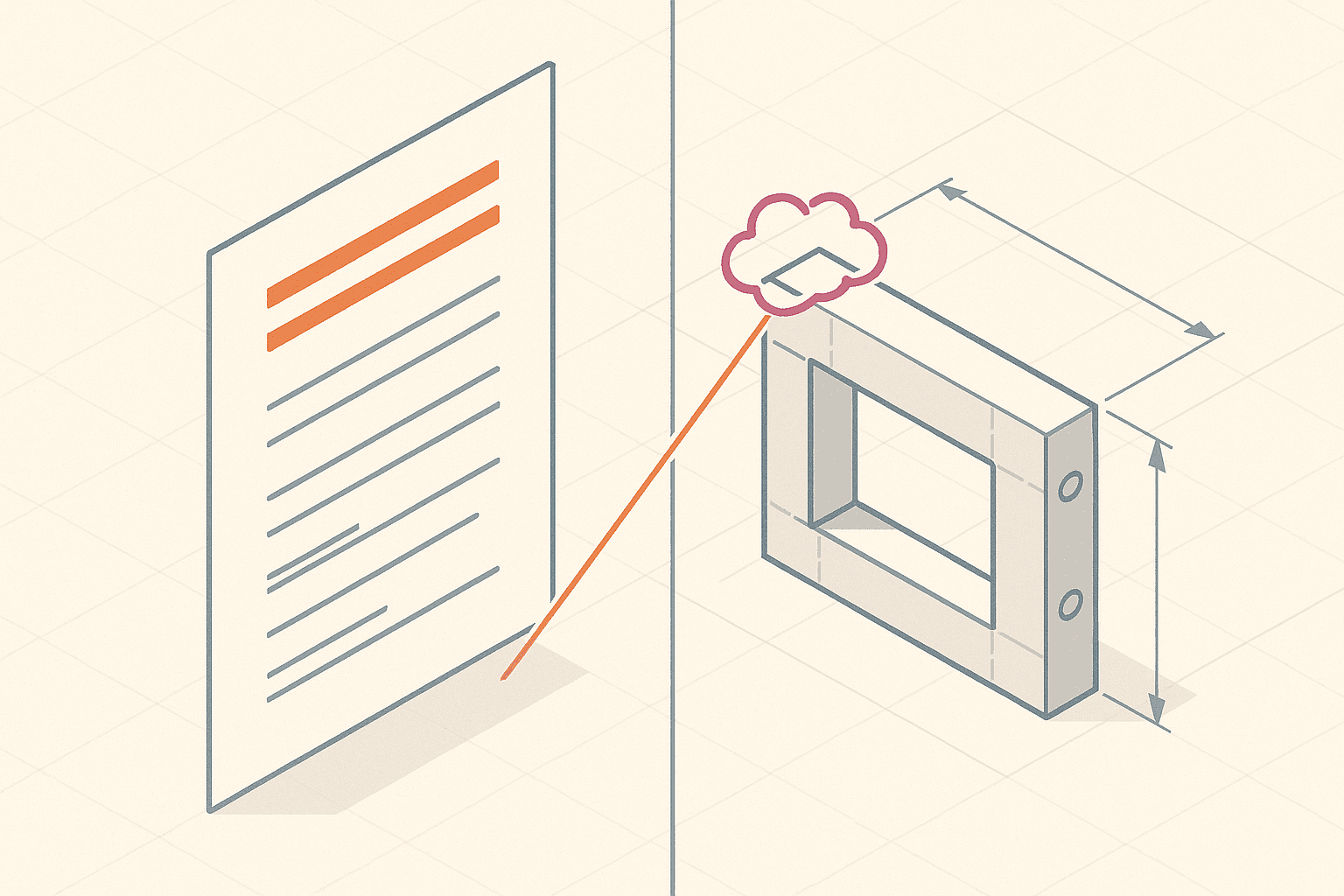
How do you catch conflicts between specs and drawings?
Conflicts between the spec and the drawings are one of the most expensive sources of rework on site. Here is where they hide, why people miss them, and how to find them before they cost you.
CieloJune 18, 2026 · 3 min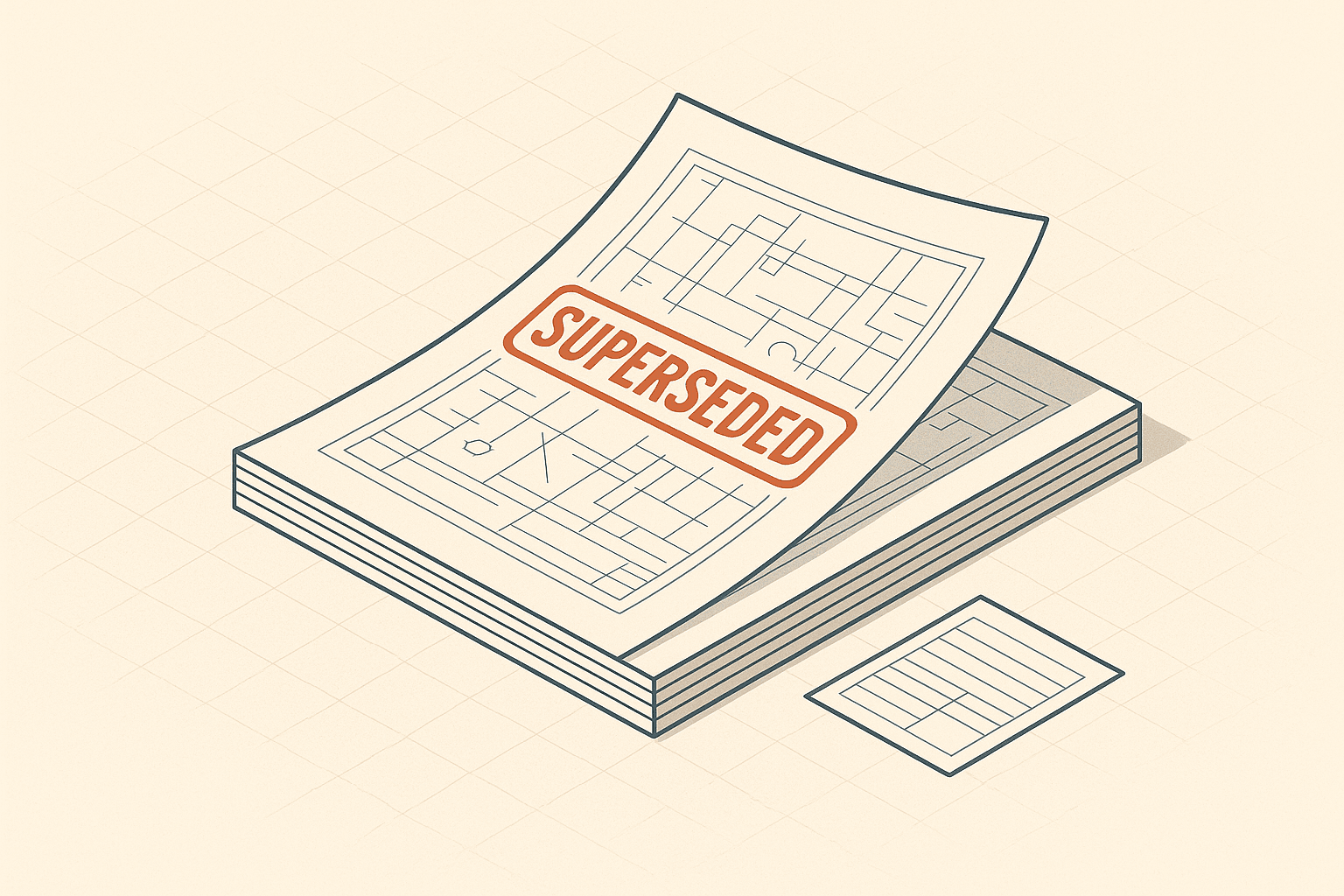
How do you stop your crew from building off a superseded drawing?
Building from an out-of-date drawing is one of the most expensive mistakes on site, and one of the most preventable. Here is the revision-control discipline that keeps everyone on the current set.
 ZanderJune 15, 2026 · 3 min