
How do you stop your crew from building off a superseded drawing?
Building from an out-of-date drawing is one of the most expensive mistakes on site, and one of the most preventable. Here is the revision-control discipline that keeps everyone on the current set.

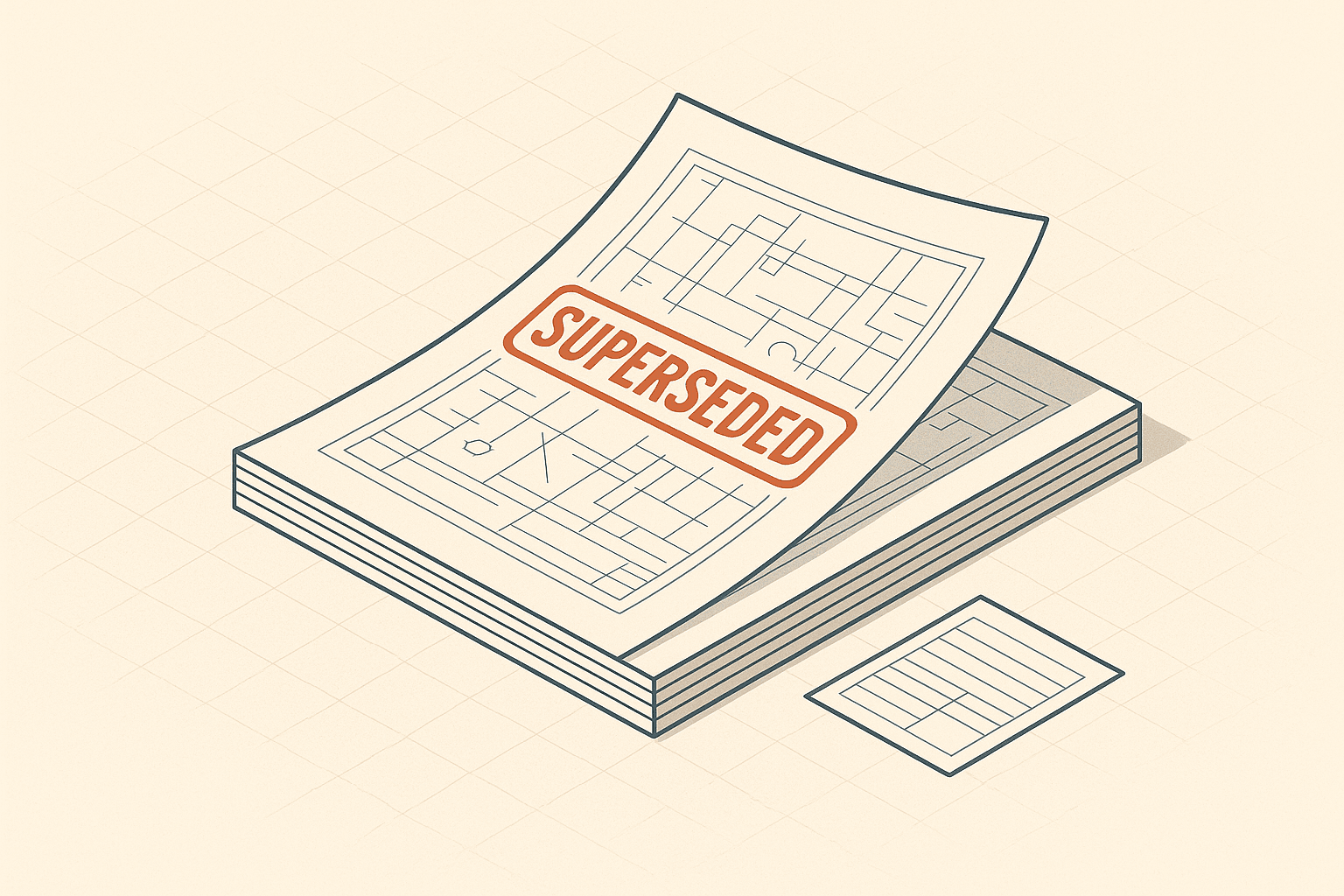
Ask a site team for their worst rework story and a surprising number have the same shape. A trade built exactly what the drawing in front of them said, and the drawing was two revisions out of date. The work was good. The information was wrong. And nobody caught it until the cladding was up or the penetrations were already cut.
Building from a superseded drawing is one of the most expensive mistakes on a job and one of the most preventable. It is not a skill problem. It is a distribution and control problem, and that is good news, because controls are fixable.
Why do crews end up on the wrong revision?
Usually one of three things. A new revision was issued but never reached the field, so it sat in an inbox instead of going on the wall. The old revision was never pulled, so two versions of the same sheet exist on site and someone grabs the wrong one. Or the change was not obvious, because the revision looked cosmetically similar and the affected detail was not clearly flagged.
Every one of these is a control failure, not a competence failure. Fix the control and the mistake mostly disappears.
What does good revision control actually look like?
Four habits do most of the work.
One authoritative source, current set only. All active drawings live in one place, a controlled folder, a DMS, or a BIM platform, and that place holds the issued-for-construction set and nothing else. If the only drawings anyone can reach are the current ones, building from an old one gets a lot harder.
Mark superseded revisions in two places. When a new revision goes out, mark the previous one superseded in the drawing register and physically on site. The usual practice is a red "SUPERSEDED BY" stamp with the revision and date. Keep the old sheets for the record, well away from where work is planned.
Send a transmittal with every issue, and get it acknowledged. Every distribution goes through the same channel, with a record of what was sent, to whom, and when, and recipients confirm receipt. That paper trail does two jobs. It gets the current set to the field, and it proves when the latest information was made available, which matters a great deal if a dispute comes up later.
Walk the site and audit what is posted. Once a month, check the drawings on display against the register. You are looking for the ceiling contractor working off a sheet that is two revisions behind, and you want to catch it before the work is done, not at handover.
How do you catch what actually changed between revisions?
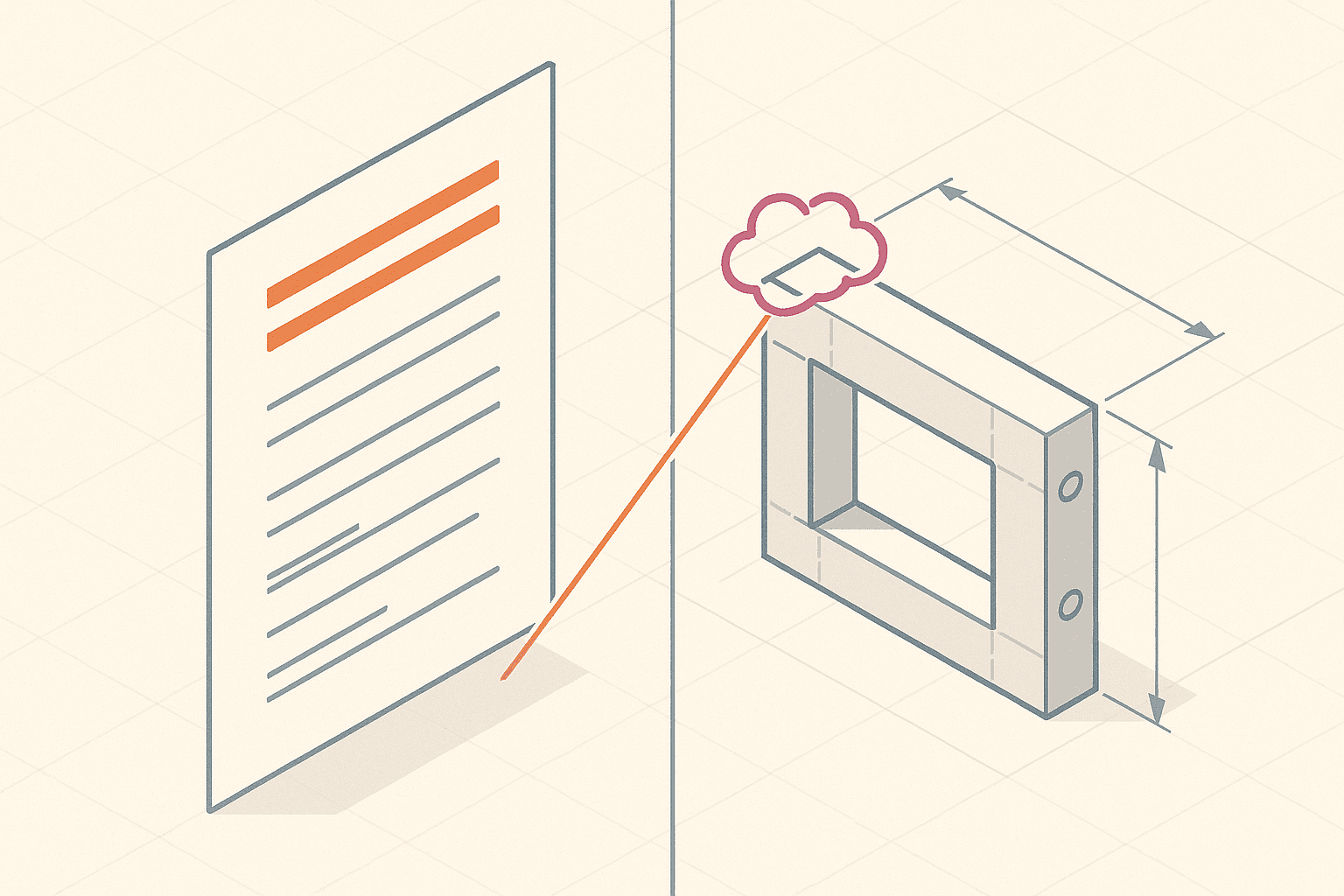
This is the gap that even disciplined teams hit. A revision cloud is meant to flag the change, but clouds get missed, and now and then a change ships without one. The reliable method is a visual comparison that overlays the old and new revision and highlights every difference, a dimension that moved, a note that changed, a detail that was deleted. Modern drawing platforms automate this. Done by hand it is slow, but it is still worth it on the high-risk sheets.
Pulling it together
The teams that almost never build from the wrong sheet do two things at once. They control distribution, with a single source, transmittals, superseded stamping and audits, and they make changes visible, with revision-to-revision comparison. Control gets the right document to the field. Comparison makes sure the field understands what is different about it.
That second half is where document intelligence earns its keep. Alloovium reads across a drawing set and its revisions and surfaces what changed, and just as usefully, flags when a revision contradicts the spec or another document, with a citation back to both. The register tells you which revision is current. The comparison tells you why it matters.
What to do next
Hold your own control loop up against the four habits above: single source, superseded stamping, transmittals with acknowledgement, monthly site walks. Most "built from the wrong drawing" incidents trace back to a gap in one of them.
If revision comparison across a big set is the part eating your time, see how Alloovium surfaces what changed, and what it conflicts with, across the whole set at once.
Reference
Frequently asked questions
Written by
Works with construction teams to put document intelligence to work on real projects. Writes about where AI actually moves the needle on site and in the back office.
See it on your set
Run Alloovium across your own contracts, specs and drawings.
Upload a project and watch it read, cross-reference and cite across the whole document set, and flag what conflicts.
Book a demoDiscussion
Comments
More dispatches
Keep reading
How do you catch conflicts between specs and drawings?
Conflicts between the spec and the drawings are one of the most expensive sources of rework on site. Here is where they hide, why people miss them, and how to find them before they cost you.
 CieloJune 18, 2026 · 3 min
Why do so many construction submittals get rejected on the first pass?
Industry research puts first-pass submittal rejection at around 35 percent, and each one costs real money and weeks of delay. Here is what is actually driving the rejections and how to stop them.
ZanderJune 17, 2026 · 3 min