The most successful construction software ever written is Microsoft Word
Our industry has spent two decades being sold faster horses. We would rather build a car.
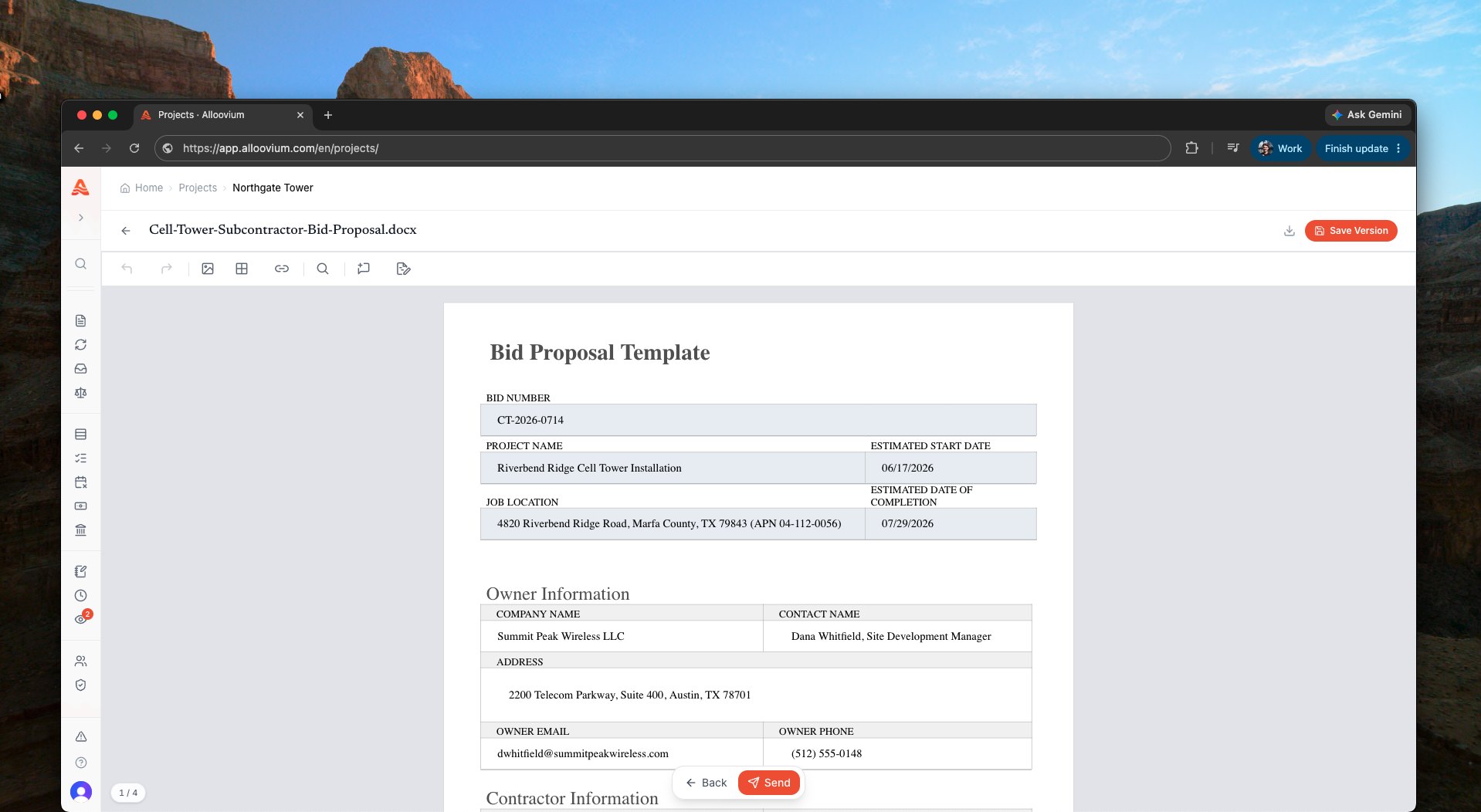
It is no secret that construction is a notoriously slow moving industry when it comes to technological adoption. The fundamentals of stacking one thing on top of another have not shifted much - the Romans and the Egyptians nailed that a long time ago. So when a new piece of tech comes along, most contractors want to wait and see what it does well before they make a decision on whether their company will see value from it.
I don't think that is stubbornness. In an industry where being wrong gets measured in millions of dollars of someone else's money, waiting is a rational thing to do.
One of the difficult parts of showing people the future is that they can only envision it from the present. Every day I see a new tool being built on top of the old systems of record, who did a really good job at taking what used to be paper and digitising it, but are struggling to paint the picture of what a construction operating system built with AI at its core would look like. Procore was the first company to take paper to digital. Twenty years on, nobody has taken digital to the next step.
Which is usually where someone reaches for Henry Ford. "If I had asked people what they wanted, they would have said faster horses." He never said this, it's actually from a cruise industry magazine in 1999, where a ship designer was speculating about what Ford's customers might have wanted. What Ford did say: "If there is any one secret of success, it lies in the ability to get the other person's point of view and see things from that person's angle as well as from your own."
Our industry has spent two decades being sold faster horses. We would rather build a car. So we dug in to look at what contractors actually use, not what they hold licences for.
What we learned
The real incumbents
Every construction software company thinks its competition is the other construction software companies. I don't think that is right. Just look at what has actually survived: paper to digital, on premise to SaaS, desktop to mobile - through every one of those shifts, the tools that never got displaced are Word, Excel and Outlook.
Not because they are excellent pieces of software, but because they are flexible.
Every platform offered the same bargain
Give us your process as a set of fields, and we will give you organisation. Work got more consistent, more findable, easier to audit, but you paid for it in adaptability, and everything that did not fit the fields leaked straight back out into a Word document or an email thread.
Codifying a process assumes the process is static
In construction, this is clearly not true. Every project is a different client, a different contract, a different set of ground conditions and a group of people who may have never worked together before.
So the industry never really left Word, because Word was the only thing that could keep up with the job. We did not stay there out of laziness, we stayed because it worked.
AI inverted the order of operations
For the whole SaaS era, if you wanted a computer to do something useful with information, you had to structure the information first, which is why we all ended up filling in forms.
AI presents the opportunity to deal with the unstructured - the document, the email, the marked up drawing, the diary entry someone wrote in a hurry at the end of a long day - and derives the structure afterwards. What was a bargain even 5 years ago is no more. You can have the flexibility of a blank document and the organisation of a system at the same time.
How we're thinking about the future
It started with compliance
Our first leap beyond the chatbot was building a rules engine to run gap analysis over the ISO frameworks - starting with 9001 and extending into 14001 and 45001 - against a contractor's own integrated management system. It reads what the standard requires, reads what the company says it does, finds the daylight between the two, and drafts the changes needed to close it.
One engine, many rulebooks
Then it became obvious we had not built a compliance tool. We had built a rules engine, and compliance was simply the first rulebook we pointed it at.
Contracts are rule based. Building codes are rule based. So are safety standards, client obligations, specifications, and the conditions attached to your own approvals.
Linked at the sentence level
Because it is built as a graph, projects and companies connect at the sentence level rather than the document level. This means we can go down to the level of granularity of a clause, in a contract, against a set of obligations, on a particular project, connected to the email where someone agreed to it and the diary entry where it actually happened.
Organic, not codified
Palantir has built something like this for defence and heavy industry, and it works by codifying the world up front: you define the objects and the relationships, then you maintain that model. That is the right design when the structure of the world holds reasonably still. A construction project does not hold still.
Ours has to form from the project as it runs, rather than be declared before it starts. That single distinction is why an operating system for construction has to be built differently from an operating system for anything else.
How are you thinking about the future?
I'm hoping some of our own thinking can inspire where you see the opportunities in construction. For AI to truly excel in our industry, it is going to require the thinking of our brightest minds, breaking outside the mould of what has worked for the last 15-20 years.
